
Top Signs You Need Garage Door Service — Don’t Ignore These
The cable that snapped and trapped a customer’s car in their garage last March in the Brookhaven neighborhood had been making a faint grinding noise for six weeks. She’d assumed it was just ‘old house sounds’ and kept hitting the button. This is a common story we see in Atlanta; what seems like minor quirks can often be early warnings of more significant, and expensive, issues. Ignoring these subtle signals can turn a simple fix, costing around $180 for a worn roller, into a $900 emergency repair on a Saturday morning when your car is stuck inside.
If you’re in Atlanta and need help with your garage door, Victory Garage Door Repair Atlanta offers free estimates — call (706) 919-9241.
Listen Closely: The Sounds of a Failing Garage Door
Your garage door is a complex piece of machinery, and like any machine, it communicates its needs through sound. Most garage door failures don’t happen without warning — they announce themselves weeks in advance through sounds, movements, and small quirks that homeowners often learn to live with. Recognizing those signals early is crucial. For instance, a spring that’s losing tension will often emit a distinct, high-pitched squeak or groan under load, different from the dull thud of a roller that’s beginning to seize up. A fraying cable, on the other hand, might present as a rapid clicking or rustling sound as it rubs against the drum. Many folks in Atlanta chalk these up to ‘just the house settling,’ but we’ve learned over our 29 years that these sounds are often the first whispers of a problem that needs attention. Don’t let these auditory cues be ignored, especially if you’re hearing them consistently in neighborhoods like Buckhead where older homes are common and garage doors see a lot of use.
- Springs losing tension: A persistent, high-pitched squeak or metallic groan when the door is moving.
- Worn rollers: A dull, rhythmic thudding or scraping sound, often more noticeable when the door is halfway open or closed.
- Fraying cables: A rapid clicking, rustling, or even a light grinding noise as the cable rubs against the pulley or drum.
Understanding these sonic differences is key to diagnosing potential issues before they become emergencies. We’ve seen many situations in Atlanta where a homeowner ignored a squeaky spring for months, only to have it snap unexpectedly, causing significant damage.
The Slow Descent: When Your Door Loses Its Zip
If your garage door seems to be moving slower than it used to, it’s almost never an opener problem and nearly always a hardware issue. Many homeowners in Atlanta mistakenly assume the opener motor is weakening and consider replacing it. This is an expensive mistake. The opener’s job is to lift and lower the door, but it’s the springs and the balanced system of the door itself that do the heavy lifting. When the door becomes sluggish, it’s usually a sign that the springs are losing their ability to counterbalance the weight of the door, or that the tracks and rollers are becoming stiff and resistant. In Atlanta, our summer humidity can sometimes cause wood doors to swell slightly, increasing friction. A door that requires more effort from the opener to move indicates a strain on the entire system, not just the motor. We often find that addressing worn-out rollers, stiff hinges, or a spring that’s losing its tension can restore the door’s original speed and responsiveness, saving you the cost of an unnecessary opener replacement.
A simple test is to disengage the opener and try to lift the door manually. If it feels excessively heavy or moves with noticeable drag, the issue lies with the door’s hardware, not the opener. This is a critical distinction that can save Atlanta homeowners a lot of money and frustration. We’ve encountered this many times in areas like Midtown, where older garage door systems are still in place.
The Visual Check: What You Can See From the Garage Floor
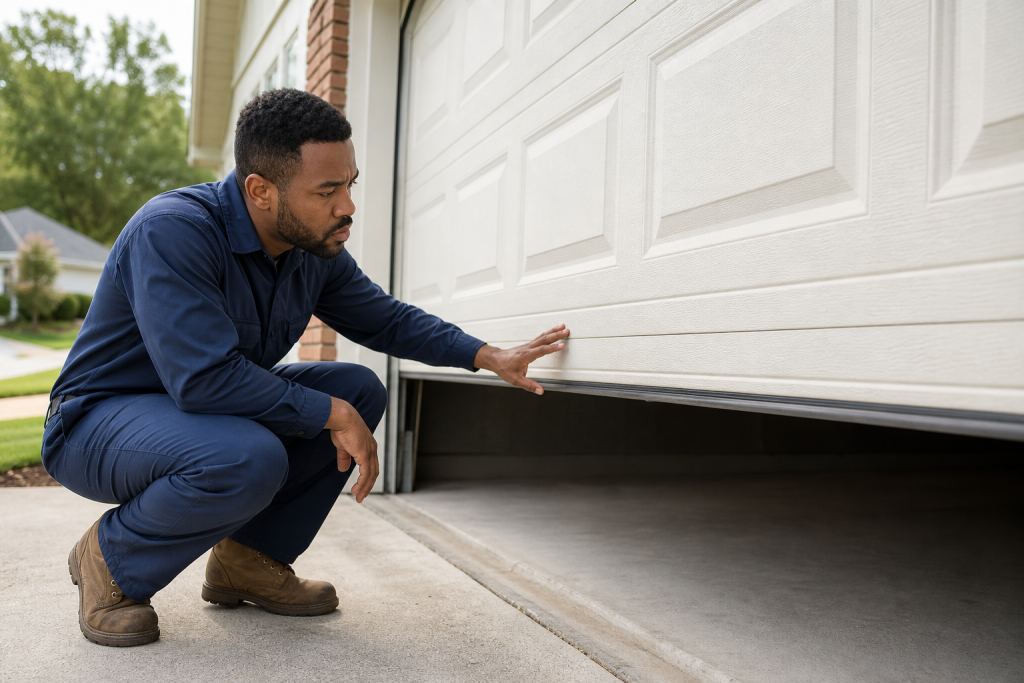
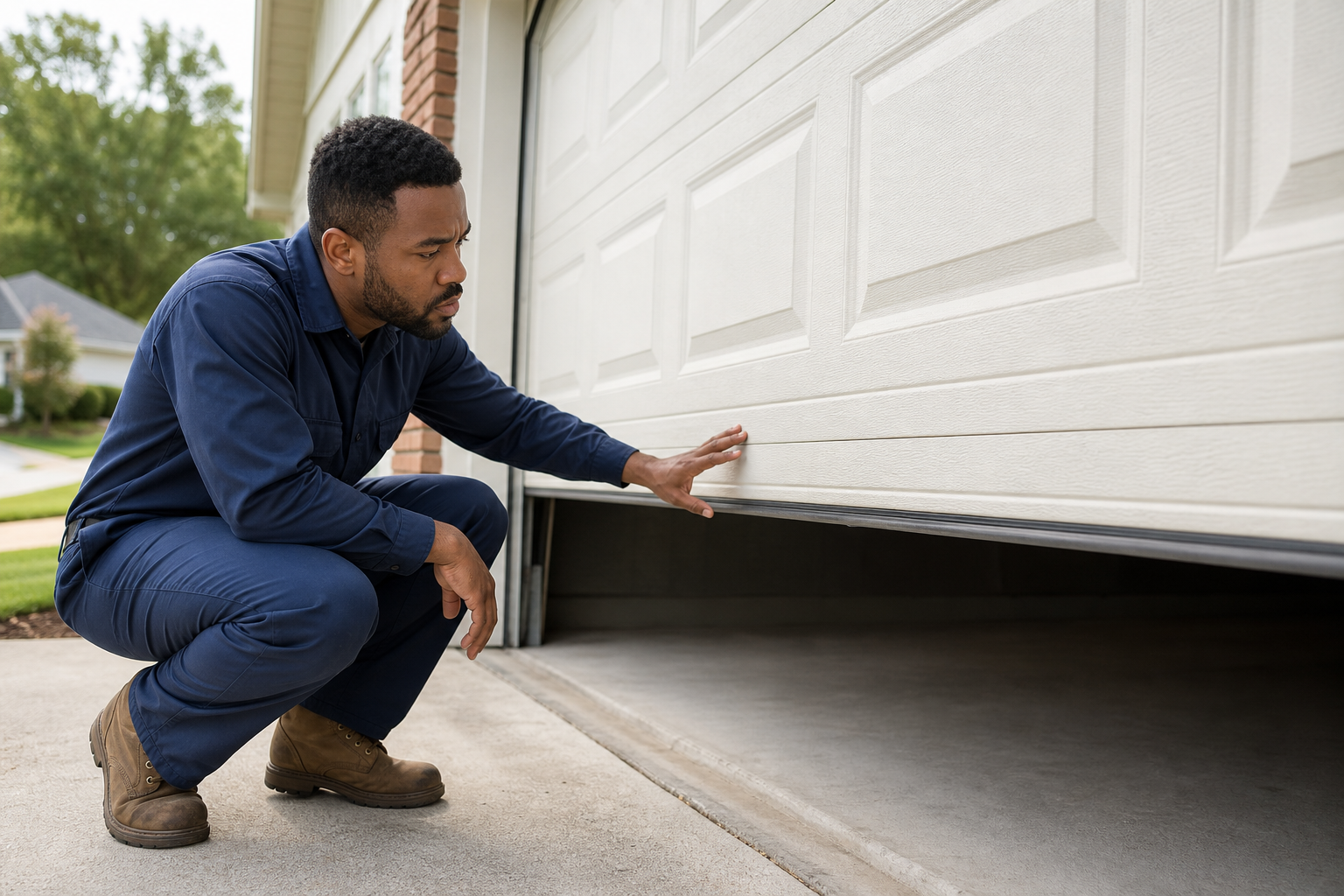
You don’t need to be a garage door expert to spot potential problems. A quick, two-minute visual inspection from the garage floor can reveal the three most common pre-failure conditions that we see throughout Atlanta. First, examine your springs. Look for any visible gaps or breaks in the coils. If you see a spring that appears to be uncoiling or has a distinct gap, it’s a critical sign it’s under immense stress and close to failure. Second, check your cables. These are the heavy-duty cables that run from the bottom corners of the door up to the drums on the torsion spring shaft. Look for any fraying, unraveling strands, or kinks. A frayed cable is a serious safety hazard and needs immediate attention. Third, inspect your rollers. Are they cracked, bent, or missing? Are they rolling smoothly in the tracks, or do they look seized up? Damaged or worn rollers can cause the door to bind, leading to further damage to the tracks and the door panels themselves. We often see these issues in older homes in neighborhoods like Vinings, where regular maintenance might have been overlooked.
These visual cues are your garage door’s way of telling you it’s time for service. Ignoring them is like ignoring the ‘check engine’ light on your car; it’s only a matter of time before a minor issue escalates.
Asymmetrical Movement: When One Side Lags Behind
One of the most urgent signals your garage door can send is asymmetrical movement — meaning one side of the door drops faster, lower, or seems to get stuck while the other side continues to move. Many homeowners dismiss this as a cosmetic issue, perhaps thinking it’s just a slight misalignment. However, this is a critical indicator of a severe imbalance in the door’s lifting system. It often means one of your torsion springs is broken or significantly weaker than the other, or that a cable on one side is slack or has come off its drum. When a garage door operates unevenly, it puts tremendous stress on the tracks, the opener, and the door panels themselves, which can lead to catastrophic failure. We’ve had emergency calls in Atlanta where a door that was operating unevenly suddenly dropped completely on one side, causing significant damage to the panel and the vehicle parked beneath it. This isn’t just an aesthetic concern; it’s a safety and structural integrity issue that requires immediate professional attention.
If you notice your garage door tilting or moving unevenly, stop using it immediately and call a professional. This is not a DIY fix, and attempting to operate it further can worsen the problem significantly. This is especially true in Atlanta homes where the door might be quite heavy.
Weather Stripping Woes: Atlanta’s Humidity and Your Seal
Atlanta’s climate, particularly its summer humidity, can create specific problems for your garage door’s weatherstripping. The constant cycle of heat, moisture, and then air conditioning can cause the rubber or vinyl seals along the bottom and sides of your garage door to degrade, crack, or become brittle. This isn’t just about keeping the weather out; a compromised seal can lead to significant energy loss from your home, allowing conditioned air to escape and warm, humid air to enter. This makes your HVAC system work harder, increasing your energy bills. Furthermore, gaps in the weatherstripping can provide easy access for pests like ants, spiders, and even rodents into your garage and, subsequently, your home. A simple test is to close your garage door and shine a bright flashlight from the inside. Any light visible along the perimeter, especially at the bottom, indicates a gap. We often find this issue in homes throughout the Atlanta metro area, from Sandy Springs to Decatur, where the humidity is a constant factor. Replacing worn weatherstripping is a relatively inexpensive repair that can make a big difference in your home’s comfort and energy efficiency.
The seal is your first line of defense against the elements and pests. If it’s failing, your garage is essentially an open invitation for unwanted guests and wasted energy.
The Bottom Line
Paying attention to the sounds, movements, and visible condition of your garage door can save you from unexpected breakdowns and costly repairs. Early detection of issues like worn rollers, fraying cables, or unbalanced springs is key to maintaining a safe and functional garage door system. If you’re experiencing any of these warning signs in Atlanta, it’s time to get professional help. Victory Garage Door Repair Atlanta offers free estimates — call (706) 919-9241.
Frequently Asked Questions
The most common garage door problems we encounter in Atlanta include broken or unbalanced springs, frayed or snapped cables, worn-out rollers, opener malfunctions, and damaged weatherstripping. These issues often manifest as unusual noises, slow movement, or the door operating unevenly.
We strongly advise against attempting to fix garage door springs yourself. Torsion springs are under extreme tension and can cause severe injury or death if they break or are handled improperly. This is a job best left to experienced professionals like our team at Victory Garage Door Repair Atlanta.
We recommend having your garage door serviced annually. Regular maintenance, especially in a climate like Atlanta’s with its humidity and temperature fluctuations, can help catch minor issues before they become major problems, ensuring your door operates smoothly and safely for years to come. This includes checking springs, cables, rollers, and lubrication.
In most cases, it’s significantly cheaper to repair your existing garage door than to replace it entirely. Repairs like replacing a broken spring, fixing a cable, or servicing an opener are cost-effective solutions. Replacement is typically only recommended if the door is severely damaged, outdated, or if the cost of repairs exceeds a substantial portion of a new door’s price. For an accurate assessment in Atlanta, call us for a free estimate.
Reviewed by Charles White, Owner & Lead Technician at Victory Garage Door Repair Atlanta, serving Atlanta since 1997.
Need Garage Door Help?
Call Victory Garage Door Repair Atlanta — licensed & insured, here with fast after-hours help in Atlanta.
(706) 919-9241